Login/Register
 Trishul Defence Academy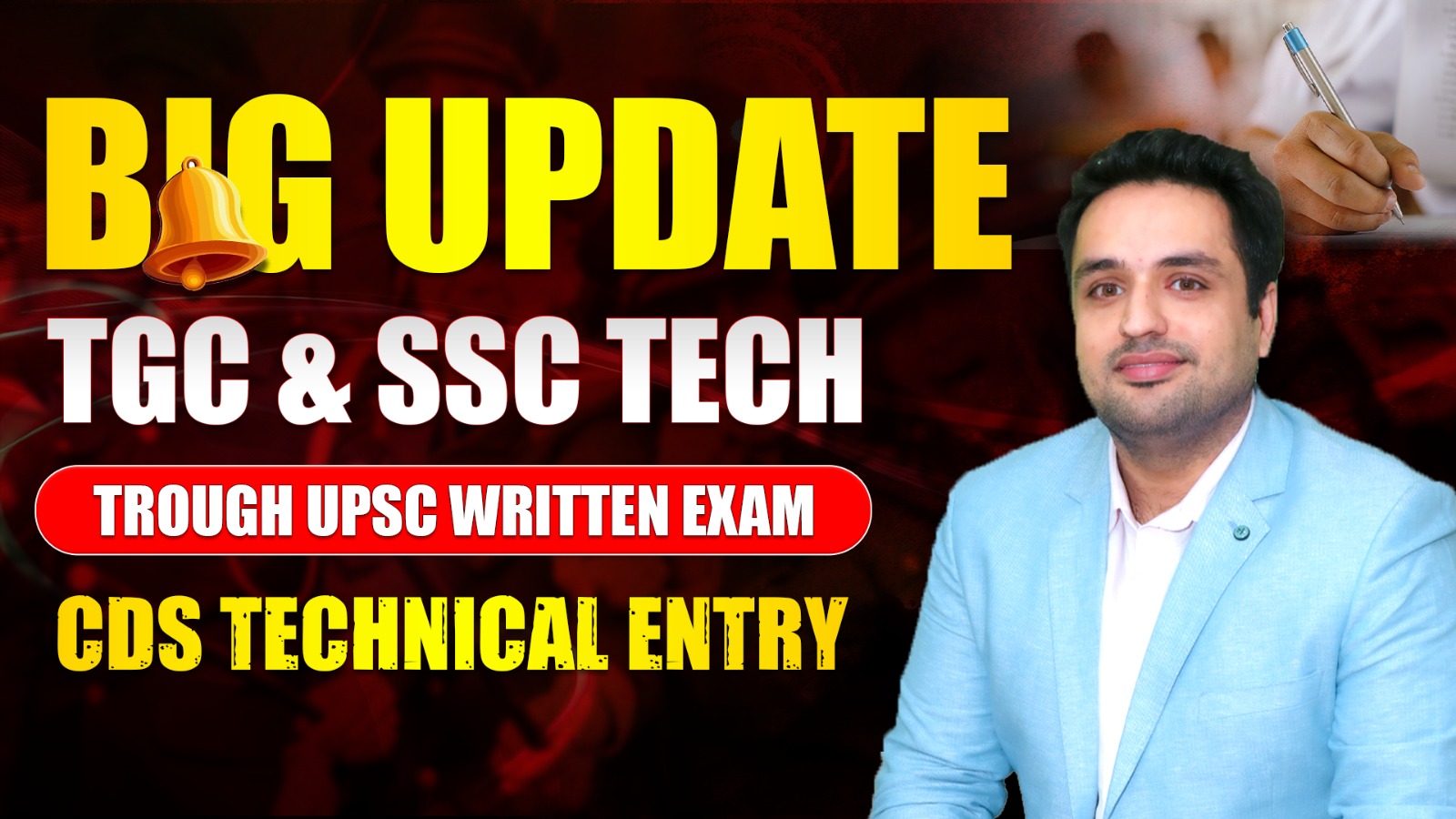
The Indian Army is planning a major reform in technical officer recruitment starting in 2026. Technical Graduate Course (TGC) and Short Service Commission Technical (SSC Tech) entries are expected to be conducted through a new UPSC-written examination called the CDS Technical Exam (CDSTE), aiming to create a more transparent and merit-based selection process for engineering graduates.
This shift marks an important change from the earlier system, where candidates were largely shortlisted based on their engineering percentage, often leaving capable aspirants without an SSB interview opportunity. The new written examination ensures equal competition at a national level.
What Is the CDS Technical Exam (CDSTE)?
The CDSTE will be a dedicated UPSC examination specifically designed for technical entries into the Indian Army. It will evaluate both general academic ability and core engineering knowledge, followed by the traditional SSB interview stage for final selection.
From 2026 onward, this system is expected to cover:
-
Technical Graduate Course (TGC) – Permanent Commission for men
-
SSC (Tech) – Short Service Commission for men and women
All technical aspirants will therefore follow a structured pathway of written exam → SSB interview → final merit.
CDSTE Exam Pattern Explained
Paper I – General Ability Test
-
Subjects: English, General Knowledge, Engineering Mathematics
-
Questions: 100
-
Marks: 100
-
Duration: 2 hours
This paper checks awareness, communication ability, and mathematical foundation—qualities essential for future technical officers.
Paper II – Stream-Specific Technical Paper
-
Covers core engineering branches such as Civil, Computer Science, Electrical, Electronics, and Mechanical
-
Questions: 100
-
Marks: 100
-
Duration: 2 hours
The objective is to evaluate conceptual clarity and subject expertise, ensuring technically competent officers for the Army.
Why This Reform Is Important
The introduction of CDSTE is considered a game-changer for defence aspirants because:
-
Selection will depend on knowledge and preparation, not just college marks.
-
Aspirants with strong technical understanding but moderate academic percentages will get fair opportunities.
-
Recruitment quality may improve due to national-level competitive evaluation.
Who Should Start Preparing?
Engineering students in pre-final or final year aiming for TGC or SSC Tech entries should begin preparation early. Candidates already preparing for competitive exams like CDS, AFCAT, GATE, or ESE may have an advantage due to familiarity with exam patterns and technical subjects.
Preparation Strategy for CDSTE
To succeed in CDSTE:
For General Ability:
-
Improve English comprehension
-
Stay updated with current affairs
-
Strengthen engineering mathematics basics
For Technical Paper:
-
Revise core engineering subjects
-
Practice objective-type questions
-
Focus on conceptual clarity instead of rote learning
Consistent study, planning, and practice will be the key to cracking the exam.
Expected Timeline
The new system is likely to be implemented from 2026, with an official UPSC notification expected the same year. Aspirants are advised to treat this as a confirmed upcoming reform and align their preparation accordingly.
Conclusion
The CDS Technical Exam (CDSTE) represents a historic shift in Indian Army technical recruitment, offering equal opportunity, transparency, and merit-based selection for engineering graduates across the country. By introducing a national-level written examination before the SSB interview, the Army aims to ensure that future technical officers are both academically strong and professionally capable.
For defence aspirants dreaming of wearing the Olive Green, early preparation for CDSTE 2026 could be the key step toward success.